
Foam mattress thickness: 20cm to 25cm for adults every night, about 10cm for young children and bunks, and density decides how long it lasts.
For an adult sleeping on foam every night, most mattress guides suggest a foam mattress thickness of about 20cm to 25cm, with heavier and side sleepers at the thicker end. A 10cm mattress suits young children, bunk beds and fold-away beds. Density matters as much as the centimetres: dense foam holds its shape for longer than a thicker slab of soft foam.
The right number depends on who sleeps on the mattress and what it sits on. A child’s bunk in KZN, a spare bed on the stoep, a caravan bunk on the Garden Route and a sleeper in a truck cab all need different numbers. This guide gives you thickness in centimetres and foam density in kg/m³, matched to the beds South Africans actually sleep on.
Contents
- Thickness and foam mattress density work together
- Recommended foam mattress thickness by use
- Body weight decides how thick a foam mattress should be
- Bed base and mattress thickness
- Thin mattresses and toppers
- Signs a mattress is too thin
- Choosing your thickness with Kehls
- Resources
- FAQ
Thickness and foam mattress density work together
Two mattresses can both measure 15cm and sleep nothing alike. Thickness sets how far your body can sink before it meets the base. Density sets how much foam is packed into that space, and how long it keeps doing its job.
Foam density is measured in kilograms per cubic metre (kg/m³): the weight of one solid cubic metre of that foam. A higher number means more material and less air. According to Onsen, higher-density foam keeps its original shape and resists sagging, while low-density foam deforms far sooner.
Myth: firmer foam is denser foam. Reality: density and firmness are separate measurements, as Mattress Stores Los Angeles explains. Firmness is how hard the foam feels when you press it; density is how much foam is in it. A soft foam can be dense and a firm foam can be light, so squeezing a corner at the counter tells you only half the story.
We stock foam in 10 densities, so the question at the counter is rarely just “how thick?” It is “how thick, in which grade, for whom?”
Key takeaway: buy thickness for comfort and density for lifespan.
Recommended foam mattress thickness by use
A cot, a bunk, a caravan and a double bed for two adults each give a mattress a different job. On a bunk there is also a safety limit that caps the thickness.
Thickness guide table
| Use | Guide thickness | What to check |
| Cot and young children | 8cm to 12cm | The mattress fills the frame with no gaps at the edges |
| Older children and teens | 12cm to 18cm | Go thicker as they grow |
| Bunk beds | No thicker than the bunk maker’s maximum | At least 13cm of guard rail above the mattress |
| Single adult, nightly | 20cm to 25cm | Lighter adults can go down to about 14cm in a dense grade |
| Double, two adults nightly | 20cm to 25cm | Choose for the heavier of the two sleepers |
| Guest bed, occasional use | 14cm to 18cm | Go thicker for long stays or heavier guests |
| Fold-away and spare beds | About 10cm | Check how thick the frame allows when folded |
| Caravan, boat, taxi and truck cab | Set by the space | Measure the sleeping area’s length, width and headroom, plus any lid or door clearance |
Rule of thumb: 20cm to 25cm for adults on foam every night, 14cm to 18cm for an occasional guest bed, and about 10cm for young children, bunks and fold-away beds.
Thickness is only one dimension: check length and width against our guide to mattress sizes in South Africa too.
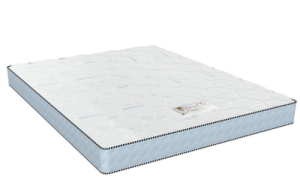
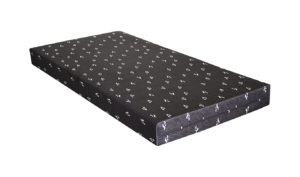
Our foam mattresses include Contractor mattresses in a 760 at 100mm and singles at 125mm and 150mm, plus Vita Value, Snooze Me (single to queen) and taxi mattresses, all stocked at our Cape Town and George branches. For beds that don’t match a standard size, our custom foam mattresses are cut to your measurements.
Body weight decides how thick a foam mattress should be
Picture two adults on the same 15cm mattress. The lighter back sleeper rests in the top few centimetres and feels supported. The heavier side sleeper pushes shoulder and hip deep into the foam and, by morning, can feel the base underneath.
That matches Sleepopolis’s mattress thickness guide, which says heavier sleepers need a thicker mattress and side sleepers do best on a thicker bed with softer layers near the top. Side sleepers load their weight onto two narrow points, the shoulder and the hip, so the foam has to give way there without letting them reach the bottom. Back sleepers spread the same weight across a wider area, so they sink less.
Morphea puts the minimum for adult use at about 14cm, so a lighter adult can manage on 14cm to 15cm in a dense foam grade. For most adults sleeping on foam every night, 20cm to 25cm is the range the guides settle on, and heavier sleepers should sit at the top of that range or above it.
Scenario snapshot: a couple shares a double bed. One is lighter and sleeps on their back; the other is heavier and sleeps on their side. Choose the thickness for the lighter sleeper and the other wakes with sore hips. Choose the thicker end of the range in a dense grade and both are supported.
Key takeaway: buy for the heaviest person who sleeps on the mattress most nights, not the average.
Bed base and mattress thickness
What sits under the foam changes how it behaves.
Slatted bases
Slats flex and leave gaps. A thin mattress over wide gaps lets the foam dip between them, which you feel as ridges and which wears the foam unevenly. A thicker, denser mattress bridges the gaps far better. If slats are spaced wide apart, a sheet of board laid across them gives the foam an even surface to sit on.
Solid bases and floor beds
A solid base gives even support, so the same mattress feels firmer on it than on slats. A thin foam mattress on the floor works well for a kids’ sleepover, a spare that lives under a bed or a reading corner. Foam on a solid surface has no air moving underneath, so stand it on its side to air now and then, especially through damp coastal winters.
Bunk bed mattress thickness and rail height
Bunks are the one bed where thicker is not better. The guard rail only works if enough of it stands above the sleeping surface. The US Consumer Product Safety Commission requires bunk bed guardrails to stand at least 5 inches (about 13cm) above the top of the thickest mattress the maker recommends. In Australia, Product Safety Australia requires bunk beds to be marked with a maximum mattress height. Either way, start with the maker’s figure.
To work it out yourself, measure from the top of the slats to the top of the rail, then subtract 13cm.
Scenario snapshot: a bunk’s rail stands 30cm above the slats. Subtract 13cm and the mattress can be no thicker than 17cm. A 10cm mattress leaves 20cm of rail; a 20cm mattress would leave only 10cm, below the minimum.
Bunk rule: keep at least 13cm of guard rail above the mattress, and never go thicker than the bunk maker’s maximum.
Thin mattresses and toppers
A thin mattress isn’t automatically the wrong mattress. Tom’s Guide lists low-profile mattresses as a good fit for babies, bunk beds and fold-away beds, but puts most adults on a standard 8 to 12 inches (about 20cm to 30cm). That gap shows quickly when a guest bed hosts a long-stay visitor.
A topper adds centimetres without replacing the whole mattress. It works when the mattress underneath is still sound and level. It won’t fix one that has already sagged: soft foam laid over a dip simply follows the dip.
We can cut foam sheets to the size of your bed in the grade you choose, so an extra layer sits neatly on an existing mattress.
- Choose a topper when: the mattress is level, the grade is sound, and you only need a few more centimetres of comfort.
- Choose a new mattress when: there’s a visible dip, the foam no longer springs back, or the sleeper’s needs have changed for good.
Myth: a thicker mattress always lasts longer. Reality: not on its own. A thick mattress in low-density foam can lose its shape sooner than a thinner one in a dense grade. If you’re weighing up a full replacement, our guide to choosing a foam or spring mattress covers the trade-offs.
Signs a mattress is too thin
Your body usually tells you the centimetres are wrong before the mattress looks worn.
- You feel the base: slats, boards or the floor come through the foam, most often under the hip.
- Morning aches: sore shoulders or hips, especially for side sleepers, point to foam that bottoms out under pressure.
- A dip where you sleep: the foam has compressed and not recovered, which is often a density problem as much as a thickness one.
- Guests improvise: a folded duvet under the sheet is a polite way of saying the mattress is too thin.
If two or more sound familiar, the fix is usually more thickness, a denser grade, or both.
Choosing your thickness with Kehls
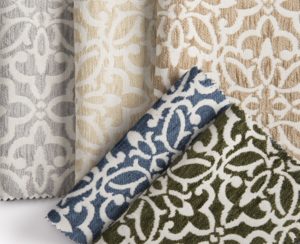
Kehls has supplied upholsterers, motor trimmers and the public since 1970. Mattresses are stocked at our Cape Town and George branches, and we offer foam cut to size at our Cape Town, George and Pinetown branches. Covering or recovering a mattress too? Start with free samples from our upholstery fabric range, sold by the metre.
Pop in-store at your nearest Kehls branch in Maitland, Pinetown or George, WhatsApp the branch, or get in touch online with your measurements and a photo of the bed. Getting foam mattress thickness right comes down to three numbers: centimetres for comfort, kg/m³ for lifespan and, on a bunk, the height of the rail. We offer free delivery in and around Cape Town, Monday to Friday.
Resources
- Onsen, Foam density: https://onsen.eu/en/blog-about-sleep/foam-density
- Mattress Stores Los Angeles, What is high density foam: https://mattressstoreslosangeles.com/blogs/mattress-buying-guide/what-is-high-density-foam
- Sleepopolis, Mattress thickness guide: https://sleepopolis.com/guides/mattress-thickness-guide/
- Tom’s Guide, How thick should a mattress be: https://www.tomsguide.com/reference/how-thick-should-a-mattress-be
- Morphea, Which mattress thickness to choose: https://www.morpheabed.com/en/blogs/news/quelle-epaisseur-de-matelas-choisir
- US Consumer Product Safety Commission, Bunk Beds Test Manual: https://www.cpsc.gov/s3fs-public/Bunk%20Beds%20Test%20Manual.pdf
- Product Safety Australia, Bunk beds: https://www.productsafety.gov.au/node/519
Frequently asked questions by customers
How thick should a foam mattress be for an adult?
Most mattress guides suggest about 20cm to 25cm for an adult sleeping on foam every night, with heavier and side sleepers at the thicker end. A lighter adult can manage on 14cm to 15cm in a dense foam grade. Density matters as much as foam mattress thickness: dense foam supports better than a thicker mattress made from soft, low-density foam.
Is a 10cm foam mattress thick enough?
A 10cm foam mattress suits young children, bunk beds and fold-away beds, but it is thinner than most guides recommend for an adult sleeping on it every night. Even an occasional guest bed is usually more comfortable at 14cm to 18cm. A denser foam helps, but extra thickness or a topper usually makes the bigger difference to comfort.
What thickness is best for a bunk bed mattress?
Bunk bed mattresses are usually thinner than standard ones so the guard rail stays well above the sleeping surface. Check the bunk maker’s maximum mattress thickness before buying, and make sure at least 13cm of rail stands above the mattress. A mattress that is too thick reduces the height of the rail and the protection it gives.
Does a thicker mattress last longer?
Not on its own. Foam density decides how long a mattress keeps its shape: dense foam resists sagging for longer than a thicker mattress made from low-density foam. The best combination is the right foam mattress thickness for the sleeper’s weight and a foam grade dense enough for nightly use.