
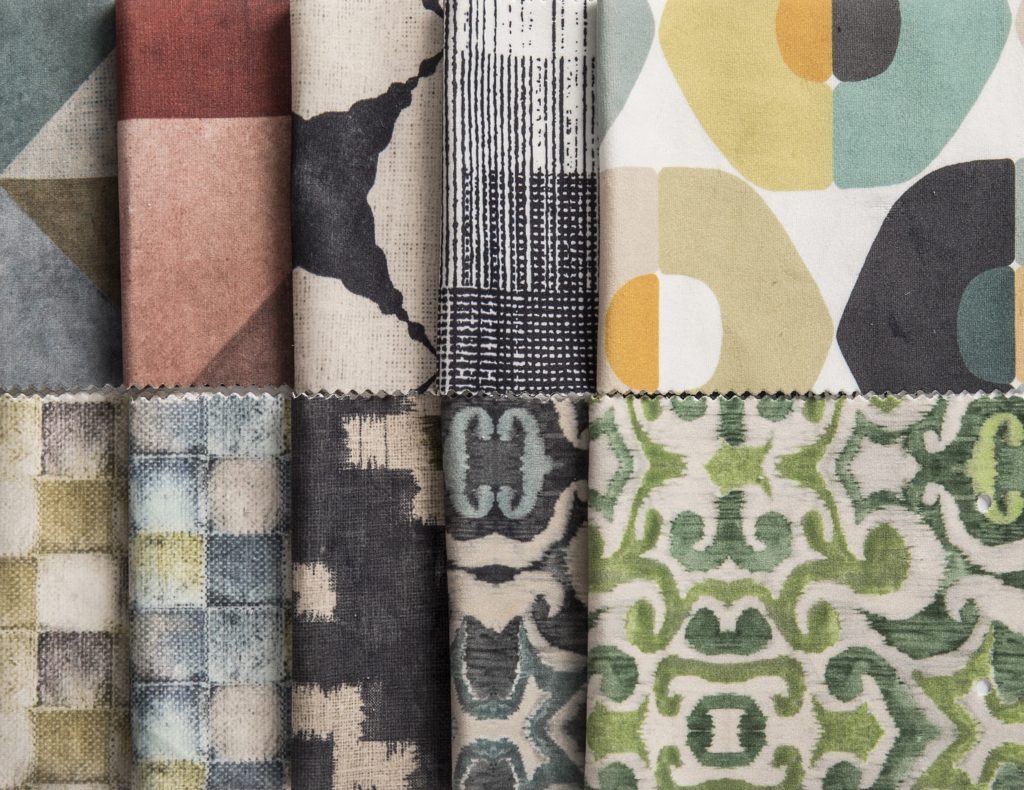
Choosing upholstery fabric is harder than it looks. There are dozens of weaves, finishes and fibre blends on the market, each with its own durability rating, hand-feel, cleaning code and price per metre. Pick the wrong one and you’ll know within a year — the seat will pill, the colour will fade on the sun-facing side of your lounge, or the cat will turn the arm of the sofa into a scratching post. Pick the right one and the same piece of furniture will outlast two redecorations.
This guide walks through how upholstery fabric is actually built, how to read a durability rating, which fabric families suit which pieces of furniture, and how to think about pets, kids, humidity and harsh South African sun.
If you’d like to feel the difference between a 25,000-rub chenille and a 60,000-rub contract weave before you commit, a free swatch from the decor fabric range is the easiest way to start.
How upholstery fabric is actually made: fibres, weaves and finishes
Every piece of upholstery fabric starts as fibre, gets spun into yarn, and is then either woven, knitted or bonded into cloth. Understanding the three layers — fibre, construction and finish — is what lets you read a fabric in your hands and know how it will behave on a couch in three years.
Natural fibres
Cotton is soft, breathable and takes dye beautifully, which is why so much printed decor fabric is cotton or cotton-blend. Pure cotton is comfortable to sit on and forgiving to sew, but it wrinkles, it absorbs spills rather than repelling them, and it loses tensile strength under UV. Linen has the same upsides but creases even more readily — it suits a guestroom chair, less so a family sofa. Wool is genuinely tough, naturally flame-resistant and resilient under heavy use, which is why you’ll still see it on classic chesterfields; it’s expensive and harder to source locally in upholstery weights.
Synthetic fibres
Polyester is the workhorse of South African upholstery — affordable, abrasion-resistant, resistant to fading, and easy to clean. It’s also the backbone of most performance fabrics. Nylon is stronger than polyester per gram and adds to a blend’s durability; it’s almost never used alone in decor. Acrylic mimics wool’s hand and is the fibre of choice for solution-dyed outdoor fabrics because the colour goes all the way through the fibre. Viscose (rayon) is technically regenerated cellulose; it adds sheen and softness to blends but weakens when wet, so a 100% viscose fabric is a poor choice for anything that needs to be washed.
In practice most upholstery fabric on the floor at a Kehls branch is a blend — for example a polyester-cotton or a polyester-viscose chenille — engineered to combine the hand of a natural fibre with the resilience of a synthetic.
Weaves: woven, knitted, non-woven
Almost all upholstery is woven, because the interlaced warp and weft give the cloth dimensional stability under repeated stretching. Knitted fabrics (used for some stretch covers and automotive headliners) move too much for traditional fixed upholstery. Non-woven fabrics — felts, interlinings — sit behind the upholstery as backings and reinforcements rather than as the show surface.
Within woven fabrics, the tightness of the weave matters more than most buyers realise. A loose weave snags on jewellery and pet claws; a tight weave shrugs both off. When you press your thumb into the fabric, you should not see the warp threads spreading apart.
Finishes
A finish is what the mill does to the cloth after weaving. Stain-resistant finishes (Teflon-style or fluorocarbon-free equivalents) make spills bead rather than soak. Flame-retardant finishes are required on contract upholstery — hotels, lodges, healthcare — and many SA contract fabrics carry SABS or BS 5852 compliance. Water-repellent finishes shed splashes but are not waterproof. Anti-microbial finishes are common on healthcare and outdoor vinyl. If a finish matters to your project, ask for it explicitly — finishes are often quoted as an add-on rather than assumed.
Durability: how to read a Martindale rub count (and why it matters)
The Martindale test is the international standard for measuring how a fabric resists abrasion. A small disc of fabric is rubbed against a standard wool abrasive in a figure-of-eight motion under a fixed weight, and the cycles are counted until the cloth shows visible wear or two threads break. That number — 15,000, 30,000, 60,000 cycles — is the rub count.
It’s the single most useful spec on an upholstery tag, because it tells you how the fabric will hold up under the friction of bodies, clothing, pets and cushions sliding around. It does not tell you about pilling, colour fastness or stain resistance — those are separate tests. But for the question “is this fabric tough enough for where I want to put it?”, the rub count is the answer.
Rub count (cycles) | Suitable use |
| Under 10,000 | Decorative only — scatter cushions, lampshades, light curtains |
| 10,000 – 15,000 | Light domestic — occasional chair in a quiet room |
| 15,000 – 25,000 | General domestic — bedroom headboard, dining chairs, lightly used sofa |
| 25,000 – 40,000 | Heavy domestic / light commercial — main family lounge sofa |
| 40,000 – 60,000 | Heavy commercial — hospitality, lodge, office reception |
| 60,000+ | Severe contract — high-traffic hotels, healthcare, transport |
A practical note: South African retail fabric tags don’t always publish the Martindale figure, and on imported decor ranges the number on the swatch book may be a mill claim rather than a tested result. If durability matters for your project — and on a main sofa it does — ask the supplier for the rub count in writing. A trade-experienced floor manager at any Kehls branch can usually pull it off the mill spec sheet on request. For a deeper explainer with worked examples, see our companion piece What is Martindale rub count? [TODO sibling link].
One more thing the rub count won’t tell you: how a fabric looks after wear. A 25,000-rub chenille can still look beautifully aged at 30,000 cycles, where a 25,000-rub flat weave can look exhausted at 15,000. Pile, texture and pattern all hide wear; flat, solid, light-coloured weaves expose it.
The major fabric families, ranked by where you’d use them
What follows is a working tour through the upholstery fabric families you’ll actually meet in the South African market, in roughly the order most buyers encounter them. Click through to the relevant range to see colours, weights and indicative pricing.
Velvet
A cut-pile fabric — short, dense fibres stand up from a woven base — that gives a deep, luxurious surface and a particular way of catching light. Modern upholstery velvet is almost always polyester or a poly-cotton blend rather than silk, which means it’s far more practical than its reputation suggests: most contract-grade velvets test in the 25,000–50,000 rub range and clean up well. Watch for crush marks on heavily used seat cushions, and brush the pile in one direction to avoid the “shaded” look settling in unevenly.
Chenille
Chenille is named for the caterpillar-like yarn it’s woven from — short fibres trapped between two core threads. The result is a soft, plush hand with a subtle sheen, and a forgiving surface that hides wear well. Typical rub counts sit between 20,000 and 40,000. The watch-out is snagging — claws and Velcro can pull at the pile — so it’s a better fit for households without rough-clawed cats.
Bouclé
Bouclé is built around looped yarns that give the cloth a textured, nubby surface. It’s having a long moment on occasional chairs and accent sofas because of how it photographs. Practically, bouclé has the same weakness as chenille — loops snag — but a tightly woven bouclé in a good polyester blend is more durable than it looks. Best for adult lounges and feature pieces rather than children’s playrooms.
Jacquard
A jacquard is any fabric woven on a jacquard loom, which allows complex multi-colour patterns to be woven directly into the cloth rather than printed on top. The pattern is visible on both faces and won’t wear off. Jacquards range from heavy formal upholstery weights to lighter decor weights — confirm the rub count before specifying for a high-traffic seat.
Damask
Damask is a specific kind of jacquard with reversible figured patterns, traditionally in a single colour with a tonal sheen contrast. It reads as classical and works well on dining chairs, headboards and formal wingbacks. Like jacquards generally, it can range widely in weight; verify durability for the use you have in mind.
Tapestry
Tapestry fabrics are densely woven, often multi-coloured and figured, and traditionally heavier than other decor fabrics. They sit naturally on heritage-style furniture — wingbacks, ottomans, traditional dining chairs. Tapestry’s tight weave makes it harder for claws to penetrate, which is a quiet win for pet households.
Woven (general)
The general woven category covers solid-colour and textured plain weaves that don’t fit neatly into the pile or jacquard families. These are the bread-and-butter sofa fabrics — a tight polyester-blend woven in a tweedy or linen-look texture, in a 25,000–35,000 rub range, available in a wide neutral palette. If you don’t know where to start, start here.
Corduroy
Corduroy is a cut-pile fabric like velvet, but with the pile arranged in vertical ridges (wales). It’s tougher than it looks, hides crumbs and cat hair well, and has come back into upholstery use for accent chairs and modular sofas. Hoover with the wales, not against them, and avoid heavily contrasting pile direction across joining panels at cutting time.
100% Cotton
100% cotton decor fabric is breathable, easy to sew, takes prints brilliantly and feels honest. It also creases, absorbs spills, and fades faster than synthetics under direct sun. Excellent for slipcovers (which can be removed and washed), scatter cushions and headboards; less ideal for a sun-drenched stoep-facing lounge sofa.
Polycotton
Polycotton blends — typically around 60/40 or 80/20 polyester-cotton — keep most of cotton’s hand while adding the resilience, colour-fastness and abrasion resistance of polyester. For everyday family-room upholstery this is one of the most practical choices on the market.
Canvas
Heavy plain-weave canvas in cotton or poly-cotton is built for hard wear: deck chairs, slipcovers, beanbags, cushion outers, sun-loungers. It’s stiff at first and softens with use. Look for canvas with a water-repellent finish if it will see outdoor duty.
Linen
Linen isn’t a Kehls range page on its own, but it deserves a mention because customers expect it. True linen is from flax fibres; it has a distinctive slubby, matte hand and excellent breathability. It creases readily, fades under UV and absorbs spills. Linen-look polyesters give a similar visual at much higher durability — for most sofas, that’s the more practical specification.
Fabric family summary
Fabric | Feel | Typical Martindale range | Best for | Watch-outs |
| Velvet | Soft, deep pile, light-catching | 25,000–50,000 | Feature sofas, occasional chairs, headboards | Crush marks, pile direction |
| Chenille | Plush, slightly sheeny | 20,000–40,000 | Family lounge sofas | Snagging from claws and Velcro |
| Bouclé | Looped, textured, nubby | 15,000–35,000 | Accent chairs, statement pieces | Loops snag |
| Jacquard | Patterned, structured | 20,000–60,000 | Formal seating, headboards | Verify rub count by range |
| Damask | Patterned, tonal sheen | 20,000–40,000 | Dining chairs, formal sofas | Same as jacquard |
| Tapestry | Heavy, dense, figured | 30,000–60,000 | Wingbacks, ottomans, heritage pieces | Heavier weight on small chairs |
| Woven (general) | Flat, textured, neutral | 25,000–40,000 | Everyday sofas | Light solids show wear |
| Corduroy | Ridged pile | 20,000–40,000 | Accent chairs, modular sofas | Pile direction at seams |
| 100% Cotton | Soft, breathable, matte | 10,000–25,000 | Slipcovers, cushions, headboards | Creases, absorbs spills, UV fade |
| Polycotton | Cotton hand, polyester body | 15,000–35,000 | Everyday domestic upholstery | Pattern range narrower than pure poly |
| Canvas | Stiff, heavy, plain | 25,000–50,000 | Outdoor cushions, deck chairs | Stiff until broken in |
| Linen / Linen-look | Slubby, matte | 10,000–30,000 | Guest seating, occasional chairs | Real linen creases and fades |
Choosing by furniture piece
Main lounge sofa
This is the most-used seat in the house, so prioritise durability and cleanability. Target a 25,000+ rub count and a fabric that hides wear — a textured polyester woven, a mid-weight chenille, or a contract-grade velvet. Avoid loose-weave linens and pale plain weaves. With load-shedding keeping families in the lounge longer, a sofa fabric you can wipe down is worth the small premium.
Feature occasional chair
This is where you can spend the design budget. A bouclé, a deep jewel-tone velvet, or a statement jacquard all sit beautifully on a single accent piece because the wear is genuinely lighter. A 15,000–25,000 rub range is usually plenty.
Dining chairs
Spills are the issue. Specify a tight-weave fabric in a forgiving pattern, with a stain-resistant finish. Damask, jacquard and tight wovens all work well. Consider whether the seats are removable for cleaning — if they are, you have more freedom.
Headboard
Headboards see almost no abrasion, so the conversation here is about aesthetic and cleaning. Velvet, linen-look weaves and bouclé all photograph beautifully on a headboard. For households where pets sleep on the bed or for renters who want a wipe-clean surface, upholstery vinyl gives the look of leather at a fraction of the price.
Scatter cushions
Cushions are your low-risk place to experiment — patterns, textures, jewel colours. Match the upholstery weight of the cushion to the use: throw pillows on a guest bed can be lightweight; floor cushions for a kids’ playroom need a 25,000+ rub canvas or heavy woven.
Curtains
Decor weight rather than upholstery weight. Drape and light behaviour matter more than abrasion. Cotton, linen-look polyesters and lighter jacquards all work. Pair with lining for body and longevity, and use a block-out behind the face fabric where you need a darker bedroom or to control westerly afternoon sun (covered in detail in Section 6 below).
Outdoor and patio furniture
This is a different category of fabric, not a different colour of indoor fabric. South African outdoor seating sees high UV, humidity on the coast, and frequent rain, and ordinary upholstery fabric will fade and rot within a season. Look for outdoor fabrics and patio-grade weaves that are solution-dyed (colour woven into the fibre, not printed on) and rated for UV. Solution-dyed acrylics are the gold standard. You can use outdoor fabric inside, but the reverse is rarely a good idea.
Choosing by household: pets, kids, allergies and humid coastal climates
Homes with cats
Cats and looped weaves are a bad combination — claws hook into bouclé and chenille loops and pull threads. Look for tight, flat weaves; a heavy woven polyester or a tight jacquard will shrug off everyday claw contact. Upholstery vinyl and leather are the most claw-resistant surfaces because there are no threads to pull. Slipcovers in heavy canvas are another defensible option — the slip can be replaced if it goes.
Homes with dogs
Dogs bring hair, dirt and the occasional accident. Performance fabrics with stain-resistant finishes, polyester-heavy blends, and darker mid-tones all earn their keep. Avoid pale solids on the main sofa. Check whether the fabric can be cleaned with a damp cloth (a “W” cleaning code — see below); if it can, daily life is easier. Hair tends to brush off chenille and corduroy more easily than it leaves velvet.
Small children
Spills, food, markers and snacks. Performance fabrics with a stain treatment, tight wovens that don’t trap crumbs, and pattern over solid to disguise the inevitable. Removable, washable slipcovers are the trick most parents wish they’d known about earlier — even a single set of spare slips changes how a family lives with a sofa.
Allergy sufferers
Tight weaves trap fewer allergens than open or pile fabrics. Avoid heavy loose pile (long-pile velvets, deep boucles) in bedrooms. Synthetics shed less than natural fibres. Vacuum weekly with an upholstery head.
Humid coastal climates (Durban, Cape Town south peninsula)
Natural fibres — cotton, linen, wool — can mildew when humidity sits high for weeks. Polyester-heavy blends are the safer specification for coastal lounges and bedrooms. Look for mildew-resistant finishes on cushion fills and outdoor fabrics. Don’t store off-cuts or extra rolls in unventilated garages.
High-UV stoep furniture
UV breaks down most fibres and most dyes. Solution-dyed acrylics from the outdoor range are designed for the Karoo and Highveld sun and hold colour for years rather than seasons. Even with solution-dyed fabric, covers when the furniture isn’t in use double the lifespan.
Lining, block-out and what goes behind the fabric
The visible fabric is only half the build. Behind it sits the lining — and on curtains, sometimes a block-out — that does the structural and functional work.
Lining fabric gives curtains body, protects the face fabric from UV from the window side, and lets a lightweight decor fabric hang properly. Without lining, lightweight curtains read as flimsy and fade unevenly. On upholstery, an interlining behind a thin face fabric adds hand and longevity.
Block-out fabric is a denser, tightly-woven lining (often with a coated face) that stops light passing through. Use it in bedrooms where shift workers or young children need to sleep through Highveld summer mornings, in media rooms, and in any west-facing lounge where afternoon glare is a problem. Block-out also adds a useful amount of acoustic dampening and slightly improves thermal performance in winter.
A small practical note: block-out is heavier than standard lining, so check that your curtain track and rail are rated for the combined weight before specifying.
Estimating how much fabric you need
The honest answer is “it depends on the piece and the pattern repeat”, but the table below is the rule-of-thumb starting point our floor staff use when a walk-in customer asks. Always confirm with the upholsterer doing the work, because piping, buttoning, skirts and pattern matching all add metres.
Project | Approx. metres (140cm wide) | Notes |
| Single dining chair seat (drop-in) | 0.5 m | Allow 0.75 m for pattern matching |
| Full dining chair cover (with back) | 1.5 m | More if back is shaped |
| 2-seater sofa | 7–10 m | Add 2–3 m for piping and skirts |
| 3-seater sofa | 10–14 m | Add 3–4 m for skirts and scatters |
| Wingback chair | 6–8 m | Patterned fabric increases need |
| Standard headboard (king) | 3–4 m | Plus 1 m if buttoned and piped |
| Pair of scatter cushions (60×60cm) | 1.5 m | One cushion needs roughly the same area both sides |
| Standard 2.4m curtain pair, full drop | 8–12 m | Doubles for fullness; add for pattern repeat |
Two big caveats. First, pattern repeats can swallow metres — a fabric with a 60cm vertical repeat needs significantly more cloth than a plain weave to keep the pattern aligned across panels. Second, fabric width changes the maths: most decor fabric runs at 140cm wide, but some heavier wovens come at 280cm, which can cut your metreage need almost in half on large pieces. Always confirm the width before quoting yourself.
If you bring a photo and rough measurements of the piece to a Kehls branch, the floor team can advise per-project at Cape Town, Durban or George — that’s a faster path to a confident number than a generic table. For a full walkthrough of sofa estimation specifically, our follow-up piece How much fabric do I need to reupholster a sofa? [TODO sibling link] goes deeper.
Care, cleaning and making fabric last
Five habits stretch the life of any upholstery fabric, regardless of fibre.
Vacuum weekly. Grit settling into the weave is the single biggest cause of accelerated abrasion. A soft-brush upholstery attachment, run with the pile, gets it out before it does damage.
Rotate cushions. Flip seat cushions weekly, swap them between positions monthly. Wear distributes across the set instead of collapsing one cushion.
Treat spills immediately. Blot, don’t rub. Use a clean white cloth and work from the outside of the stain inward. Match the cleaning method to the fabric’s care code (below). Don’t soak — particularly on viscose blends and natural fibres, where the fabric weakens when wet.
Read the cleaning code. Most upholstery fabrics carry a single-letter cleaning code:
- W — water-based cleaners only. Mild soap and water is safe.
- S — solvent-based cleaners only. No water; use a dry-cleaning solvent.
- WS — either water or solvent can be used.
- X — vacuum only, professional cleaning if needed. No home cleaning.
Match the cleaner to the code. Using water on an S-only fabric leaves rings that are harder to fix than the original stain.
Professional clean every 12–24 months. A specialist upholstery clean lifts ground-in soil that vacuuming can’t reach, refreshes the pile and extends the practical lifespan. For high-use family sofas, annual is sensible; for light-use feature pieces, every couple of years is plenty.
One last call: if a sofa is structurally sound but the fabric is tired, a well-fitted slipcover in a heavy washable canvas or polycotton can buy several more years without the cost of a full reupholster. It’s not the right answer for every shape — slipcovers work best on simpler, straighter frames — but it’s worth considering before committing to a full strip-and-recover.
Buying upholstery fabric in South Africa: what to look for and what to ask
The local market is well-supplied if you know what to ask for. A few practical pointers gathered from years of fielding the same questions across our branches.
Confirm the width. Decor fabric is usually 140cm, but heavier wovens, contract fabrics and some imports come at 280cm. Width changes both the metreage you need and the price-per-metre comparison.
Read price-per-metre quotes carefully. A R250/m fabric at 140cm wide may work out the same as a R450/m fabric at 280cm wide once you’ve factored in the metreage. Always quote on usable metreage, not headline rate.
Request swatches. A swatch on the actual chair, in the actual room light, will tell you more in five minutes than an hour of swatch-book browsing under shop fluorescents. Kehls supplies swatches on request from the decor fabric range across all three branches.
Ask about off-cuts. Many decor ranges have shorter ends and remnants priced below the full-roll rate. For scatter cushions, headboards and small chairs, off-cuts can be a significant saving.
Trade buyers — order by the roll. Upholsterers, motor trimmers, contract refurbishers and decorators all benefit from roll pricing and account terms. The trade desks at our three branches handle volume orders, special imports and contract specifications — get in touch about trade pricing and we’ll set you up.
Lead times on special orders. If you need a specific colourway from a mill range that isn’t in current stock, expect anything from two to eight weeks depending on the source. Ask up front so the project schedule lines up.
Visit the branch that’s closest. Fabric is one of those things you really do want to see and touch in person before committing — and the staff at each branch deal with different mixes of trade and retail and may have different stock and remnants on hand on the day. Our branches:
- Cape Town — flagship showroom and the deepest decor fabric range.
- Durban — strong on coastal-spec fabrics and outdoor.
- George — the Garden Route hub serving both Eastern and Western Cape.
Bring photos of the piece, rough measurements, and any existing fabric you want to match. Half an hour with a knowledgeable floor person beats a fortnight of online browsing.