How to make an upholstered headboard: a board cut to size, foam and Dacron on top, fabric stapled behind, and buttons if you want a tufted finish.
Knowing how to make an upholstered headboard comes down to five layers: a wooden board, foam, a layer of Dacron, your fabric and, if you want them, buttons. Cut the board a little wider than the bed, glue on 50mm or 75mm foam, wrap it in Dacron, then stretch the fabric over and staple it to the back, working from the centre out.
Kehls has supplied upholsterers and the public since 1970, and headboards come up at the counter all the time: a new double bed with nothing behind it, a tired padded board that has gone flat, or a bedroom that needs one soft wall to lean on. Most guides online work in inches and American bed sizes, so this one is in centimetres and South African bed sizes, with materials you can buy at our branches.
Contents
- What you need
- Size the board to your bed
- Choose the foam and Dacron
- Choose the fabric
- How to make an upholstered headboard step by step
- Adding buttons for a tufted headboard
- Hanging or fixing the headboard
- Get the materials cut to size
- Resources
- FAQ
What you need
A plain padded headboard needs no workshop and very few tools. Buttons add a needle, twine and a drill.
- Board: plywood or MDF between 12mm and 19mm thick, cut to size at the hardware store.
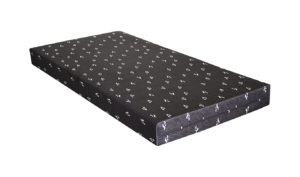
- Foam: one sheet of foam the size of the board, 50mm for a slim padded look or 75mm for deeper buttoning.
- Dacron: enough Dacron to cover the foam and wrap to the back of the board.
- Fabric: your chosen décor fabric, sized as shown below.
- Staple gun and staples: a hand or electric stapler with upholstery staples to suit it.
- Adhesive: foam glue or a spray adhesive to hold the foam on the board. We stock both.
- For buttons: upholstery buttons or button moulds, a long upholstery needle, strong twine and a drill.
- Hanging: a French cleat or two battens, or bolts to the bed base.
Size the board to your bed
Start with the bed, not the wall. According to our guide to mattress sizes in South Africa, standard widths are 92cm for a single, 107cm for a three-quarter, 137cm for a double, 152cm for a queen and 183cm for a king. Widths vary slightly between makers, so measure your own base before cutting anything.
Most headboards are cut a few centimetres wider than the base on each side so the bed sits neatly inside the frame of the board. For height, decide where the top edge should sit when you are propped up reading, then work out how much of the board the mattress and pillows will hide. Only the part above the mattress needs to look good, and on a buttoned headboard that is where the buttons go.
Key takeaway: measure the bed base, add a few centimetres each side, and plan the buttons above the mattress line.
Choose the foam and Dacron
Foam gives the headboard its shape. Dacron gives it a soft, rounded finish and stops the fabric catching on cut foam edges.
Foam thickness
Thickness is the main choice. Published tutorials use 25mm (This Old House), 50mm (Centsational Style) and 75mm (HGTV). A 50mm sheet gives a neat padded board that sits close to the wall. For buttoning, 75mm is the common choice because deeper foam lets each button sink in and form proper folds. Food52’s tufted headboard guide puts the ideal at around 3 inches, which is roughly 75mm.
For headboards and padded panels, use a high density foam grade finished with a Dacron wrap. Each of our foam sheets carries a colour and a code such as 30-20: the first number is the density in kg/m³ and the second is the firmness.
Full sheets measure 1900 x 1400mm (1900 x 1370mm for Orange and Dark Blue), so one sheet covers a headboard up to 190cm wide. Every Kehls branch stocks foam, and we cut foam to size at our Cape Town and George branches, so you can bring the board measurements and take the foam home ready to glue.
Dacron
Dacron is the soft polyester layer laid over the foam before the fabric goes on, and we stock it in 135gsm, 140gsm, 150gsm and 270gsm. Cut it large enough to cover the front and wrap round to the back of the board. This Old House notes that a soft layer over the foam (cotton batting in their guide) smooths out small flaws in the foam, which shows on light or plain fabrics.
Myth: you can skip the Dacron if the foam is thick enough. Reality: without it, the fabric sits straight on the foam, the edges look hard and square, and the fabric wears where it rubs on the cut foam.
Choose the fabric
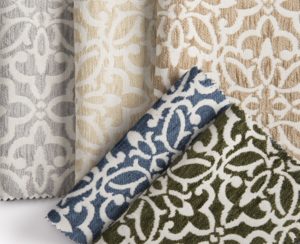
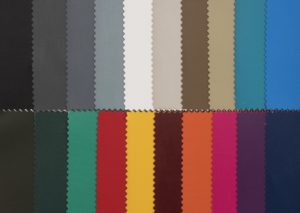
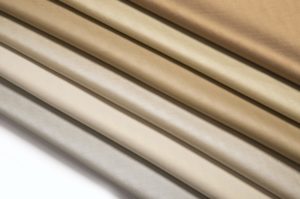
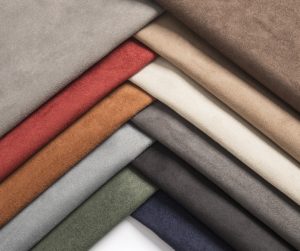
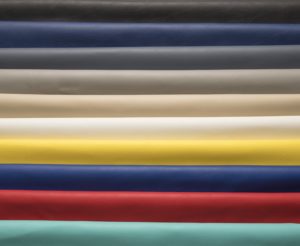
A headboard takes very little wear compared with a couch seat, so you can choose for looks: velvet, chenille, bouclé, jacquard and plain woven fabrics all work. Our velvet range lists headboards as a common use, and velvet is the classic choice for a buttoned board because the pile catches the light in each fold. For a soft, textured look, bouclé or chenille suits a plain padded board. Our guide to velvet vs chenille vs bouclé compares the three in more detail. For a headboard that needs to wipe clean, decor vinyl is made for low-wear pieces like this, as our contract vs decor vinyl guide explains.
How much fabric
Cut the fabric larger than the board on every side: add the foam thickness twice, plus about 8cm on each edge to wrap round and staple to the back. This Old House uses the same allowance of 3 inches, about 8cm.
Worked example: a double bed base 137cm wide, with a board cut 145cm wide by 70cm high and 50mm foam. The fabric piece needs to be about 145 + 10 + 16 = 171cm wide and 70 + 10 + 16 = 96cm high. Buttoning pulls fabric into each fold, so a buttoned design needs extra on top of this. Bring your board size to the counter and we will check the roll width and work out the metres with you before cutting.
If the board is wider than the fabric roll, many plain fabrics can be turned sideways so the width runs along the roll. Pile fabrics such as velvet must run the same way across the whole board, so check with us before turning them.
How to make an upholstered headboard step by step
Work on a clean floor or a large table, with the fabric ironed and the board cut and sanded.
- Mark the buttons (optional): if you are buttoning, mark the pattern on the front of the board now and drill a small hole at each mark. See the buttoning section below for spacing.
- Glue the foam: glue the foam to the board. This Old House leaves the outer edges of the foam loose, folds them down for a gentle curve, and sprays the edges so the folds hold.
- Trim the foam: trim any overhang flush with the board using a sharp blade or an electric carving knife.
- Wrap the Dacron: lay the Dacron on the floor, place the board foam side down on top, pull the Dacron round to the back and staple it, starting in the middle of each side.
- Lay out the fabric: place the fabric face down, centre the board on it foam side down, and check any pattern is straight from the front.
- Staple the centres: pull the fabric to the back and put one staple in the middle of the top edge, then the bottom, then each side. Check the front: the fabric should be smooth, not stretched.
- Work out to the corners: keep stapling from the centre of each side towards the corners, pulling evenly. Stop about 10cm short of each corner.
- Fold the corners: pull the corner point to the back and staple it, then fold the two sides into neat pleats and staple them flat. Trim the excess fabric.
- Cover the back (optional): staple a piece of lining or black cloth over the back for a clean finish.
Scenario snapshot: a homeowner makes a plain padded headboard for a queen bed with a 152cm base. They cut a 160cm board, glue on 50mm foam, wrap it in Dacron and cover it in a bouclé. With no buttons, the whole job can be done in an afternoon with a staple gun and a knife.
Adding buttons for a tufted headboard
Buttons are what turn a padded board into a tufted headboard. They take more time and a second pair of hands, but the method is simple.
Plan the pattern
The two common patterns are a straight grid and a diamond, where each row is offset by half a space. Addicted 2 Decorating marks its button rows 8 inches apart, which is about 20cm, and that is a good starting point for a double or queen board. Keep the bottom row above the line where the mattress and pillows will sit.
Make the buttons
Buttons covered in your headboard fabric give the neatest finish. We stock button moulds in sizes 28, 30 and 36, and we offer a covered button service: bring the fabric and we will cover the buttons in it for you.
Set the buttons
- Open the foam: push a pencil or your finger through each hole from the back to open a channel through the foam, so each button can sink down.
- Thread through: thread a long upholstery needle with strong twine, push it from the back through the board, foam, Dacron and fabric, through the button shank and back down the same hole.
- Pull and fix: one person presses the button down from the front while the other pulls the twine tight at the back and staples it in a zigzag, as This Old House describes.
- Work outwards: start with the centre button and work out row by row. Addicted 2 Decorating warns that pulling the fabric too tight between buttons loses the deep tufted look, so let it fold naturally.
- Fold the pleats: on a diamond pattern, fold the fabric between buttons into neat diagonal pleats, all folded the same way.
Key takeaway: start in the centre, work outwards, and let the fabric fold rather than pulling it flat.
Hanging or fixing the headboard
A finished headboard is heavier than it looks. The simplest fixing is a French cleat: two strips of wood cut at an angle, one screwed to the wall and one to the back of the headboard, which hook together. You can also screw two battens to the back and bolt them to the bed base, or stand the headboard on two legs behind the bed. Fix it into wall plugs or studs, not plasterboard alone.
Get the materials cut to size
That is how to make an upholstered headboard that looks bought, not home-made. Start with free fabric samples from our décor fabric range and hold them against the bedroom wall in daylight, then bring your board measurements to your nearest Kehls branch. Our Cape Town and George branches will cut the foam, and every branch can help you work out the fabric and Dacron. Our fabric is sold by the metre. Enjoy free delivery in and around our branch areas.
Resources
- This Old House, How to upholster a headboard: https://www.thisoldhouse.com/furniture/how-to-upholster-a-headboard
- Food52, Tufted headboard guide: https://food52.com/blog/17692
- HGTV, How to make a tufted headboard: https://hgtv.com/design/rooms/bedrooms/how-to-make-a-tufted-headboard
- Centsational Style, DIY simple tufted headboard: https://centsationalstyle.com/2010/01/diy-simple-tufted-headboard/
- Addicted 2 Decorating, Diamond-tufted upholstered headboard: https://www.addicted2decorating.com/how-to-make-a-diamond-tufted-upholstered-headboard.html
- Kehls, Mattress sizes in South Africa: https://www.kehls.co.za/mattress-sizes-south-africa/
Frequently asked questions by customers
What foam do you use for a headboard?
A high density upholstery foam sheet, usually 50mm for a slim padded headboard or 75mm for a buttoned one. Deeper foam lets the buttons sink in and form proper folds. One full sheet of 1900 x 1400mm covers a headboard up to 190cm wide. Cover the foam with a layer of Dacron before the fabric for a soft, rounded finish.
How much fabric do I need for a headboard?
Measure the board, then add twice the foam thickness and about 8cm on each side to wrap to the back. A double headboard 145cm wide and 70cm high with 50mm foam needs a piece about 171cm by 96cm. A buttoned design needs more, because each button pulls fabric into the folds.
Can I make a headboard without sewing?
Yes. A padded headboard is glued and stapled, not sewn. The foam is glued to the board, the Dacron and fabric are stapled to the back, and the corners are folded and stapled flat. Buttons are fixed with twine pulled through holes in the board and stapled at the back, so no sewing machine is needed.
What is the best fabric for an upholstered headboard?
Velvet is the classic choice for a buttoned headboard because the pile catches the light in each fold. Bouclé and chenille suit a plain padded board, and jacquard or a plain woven fabric works for a simpler look. A headboard takes little wear, so you can choose for colour and texture rather than durability.
How far apart should headboard buttons be?
Around 20cm apart is a good starting point for a double or queen headboard, in a straight grid or a diamond pattern where each row is offset by half a space. Keep the bottom row above the line where the mattress and pillows will sit, and mark the spacing on the board before gluing the foam: it is the first step in how to make an upholstered headboard with buttons.