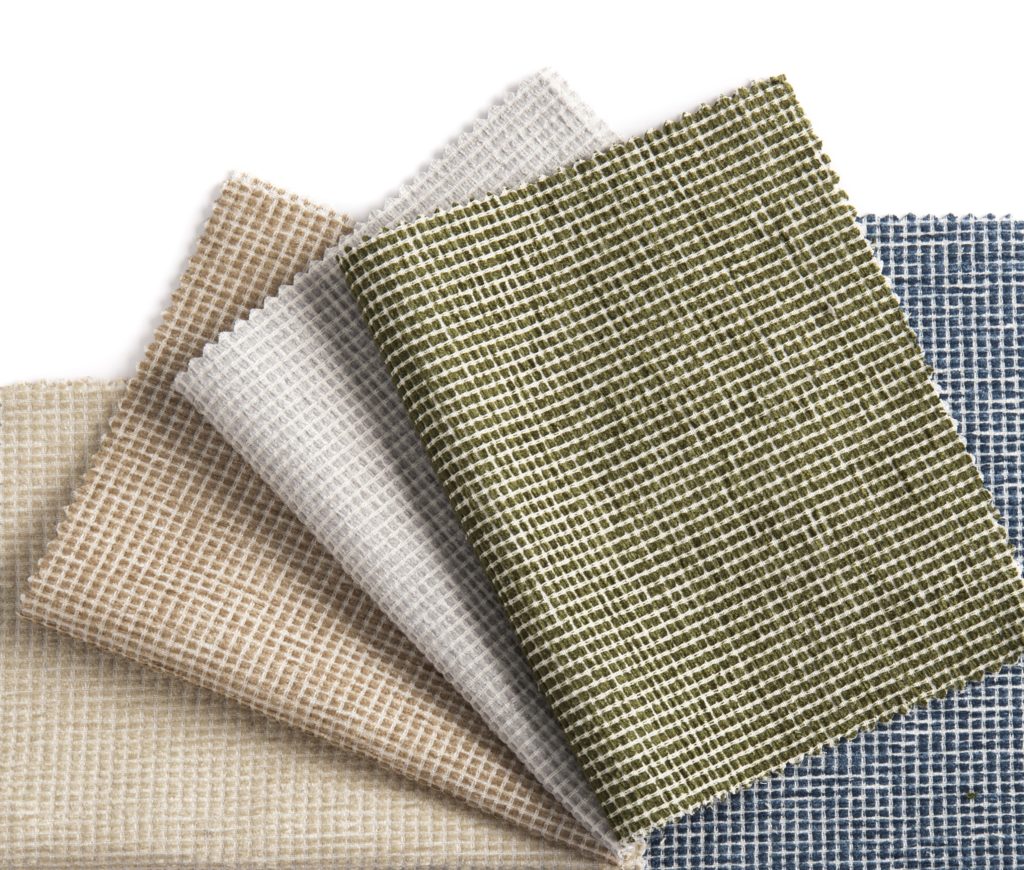
Velvet, chenille and bouclé are the three fabric families most South African homeowners shortlist for a new lounge suite or a recover job. All three look gorgeous in a showroom — but they behave very differently in a real lounge with kids on the cushions, a dog on the seat, late-afternoon sun through the sliding door, and four years of life on them. This is the honest comparison: what each fabric is, what it’s like to live with, where it wins, where it falls down, and which buyer each suits. For broader fabric choice context, see the complete guide to choosing upholstery fabric in South Africa.
Quick verdict: velvet for drama on a feature piece; chenille for everyday hard wear on the main lounge suite; bouclé for sculptural impact on lower-use chairs and accent sofas.
The quick comparison (read this first)
Property | Velvet | Chenille | Bouclé |
Look | Lustrous, light-catching pile | Soft, even, slightly hazy | Sculptural, looped, tactile |
Feel | Smooth and plush | Soft and warm | Nubby, textured, weighty |
Durability (Martindale) | ~15,000–40,000 | ~20,000–45,000 (often toughest) | ~15,000–30,000; loops snag |
Best for | Feature chairs, statement sofas, headboards | Main family sofas, lounge suites | Occasional chairs, accent sofas |
Pets and kids | Shows claw marks; cotton velvets matt | Hides hair and wear best | Loops snag on claws |
Sun tolerance | Pile can crush and fade unevenly | Holds colour well | Holds colour; loops flatten over time |
Cleaning | Brush with pile; spot-clean carefully | Vacuum and spot-clean; most forgiving | Vacuum gently; avoid over-wetting |
Price band (SA, indicative) | Mid to premium | Mid | Mid to premium |
Trend half-life | Long — perennial classic | Long — workhorse | Currently strong; trend-led |
A caveat on the Martindale [TODO sibling link] figures: ranges are indicative and depend on the specific weave, fibre blend and finish. Two chenilles at the same 30,000-rub rating can still wear differently in practice. The deep-dives below get into the why behind the numbers.
Velvet: what it is, who it suits, where it falls down
Velvet is a cut-pile fabric — short fibres stand vertical to the base weave — and that pile is what gives it the light-catching look no other upholstery fabric quite matches. Fibre matters: cotton velvets crush and matt under the spots where you sit, viscose blends have the most lustrous hand but bruise quickly, and polyester velvets combine most of the look with much better resilience. For serious use, polyester or a high-poly blend is the practical answer.
Living with velvet is a particular experience. The pile catches light beautifully, but also shows brush marks where someone has run a hand across it, “pressure-fades” where bodies routinely sit, and reveals every cat claw it meets. A good upholstery velvet tests in the 25,000–40,000 Martindale range — genuinely tough, but not forgiving of careless treatment. It’s at its best on feature wingbacks, headboards, statement sofas in formal lounges and banquettes — pieces where the drama earns its keep. Where it falls down: an active family lounge with toddlers and a cat, or a full-sun room where pile crushing and uneven fade show quickly.
Verdict: velvet is the right choice when you want the room to lead with the sofa.
Chenille: the everyday workhorse explained
Chenille takes its name from the French for caterpillar — the yarn it’s woven from is built by trapping short fibres between two twisted core threads, creating a fuzzy yarn that’s then woven into cloth. The surface reads softer, hazier and less directional than velvet, with no pronounced pile and no light-catching shimmer. It’s understated where velvet is dramatic, and that’s part of why upholsterers steer family customers towards it.
What chenille does brilliantly is hide everyday life. Hair brushes off, mild stains spot-clean, and wear distributes rather than concentrating in shiny patches. Good polyester-blend chenilles routinely hit 30,000–45,000 Martindale — often the toughest of the three families. That makes it the natural specification for main lounge suites, sleeper couches, ottomans and guesthouse furniture. Where it falls down: it lacks velvet’s drama and can read “safe” in a designed room, and cheaper chenilles pill under heavy use. For a tighter-weave alternative at similar durability, the broader woven range is worth comparing.
Verdict: chenille is the right choice for the main piece in any house that’s actually being lived in.
Bouclé: the sculptural option
Bouclé — pronounced boo-clay — is built around yarns with deliberate loops and curls, so the texture isn’t a finish, it’s the cloth itself. The surface reads heavily textured, nubby and almost three-dimensional, and on the right shape — a curved tub chair, a rounded occasional armchair, a sculptural sofa — the effect is striking in a way no flat-woven fabric matches.
Living with bouclé is higher-maintenance than chenille and more delicate than a tight modern velvet. The loops that give the fabric its character are also its vulnerability: cat claws hook into them, Velcro pulls at them, and dust collects in the texture. Bouclés typically test 15,000–30,000 Martindale — fine for an occasional chair, not for a main family sofa. It also carries trend-half-life risk: heavy current demand may date the look faster than velvet or chenille. A sculptural jacquard weave is the closest alternative if you want texture without loops.
Verdict: bouclé is the right choice for a feature piece in a calm, adult room.
Choosing for your specific situation
Main family lounge suite, kids and a dog. Chenille, every time. A 30,000+ rub polyester-blend chenille will outlast the kids’ time in the house. (See our upcoming best pet-friendly upholstery fabrics in South Africa [TODO sibling link] guide for deeper picks.)
Statement sofa in a formal lounge. Velvet. Lower foot traffic, careful occupants, drama as the point.
Feature occasional chair beside a fireplace. Bouclé or velvet, depending on the room. Bouclé reads contemporary and sculptural; velvet reads classic and rich. If the room is modern, lean bouclé; if traditional, velvet.
Headboard for a master bedroom. Velvet or bouclé — both work. Headboards see no abrasion; the call is aesthetic.
Guesthouse or B&B lounge furniture. Chenille. Easy cleaning between guests, neutral enough to suit varied taste.
Sunny north-facing lounge with big windows. Chenille is safest — holds colour and doesn’t crush. Velvet only if it’s a quality polyester velvet with good UV stability; cotton and viscose velvets fade unevenly within a year or two.
When in doubt, choose chenille for the main lounge suite and use velvet or bouclé on a feature piece — every fabric ends up doing what it’s best at.
How they compare on care and cleaning
All three respond well to weekly vacuuming and prompt spill response. Beyond that, they diverge.
Velvet needs a soft brush attachment used with the pile direction. Blot spills immediately with a clean white cloth — don’t rub, don’t soak. Most polyester velvets carry a W or WS code, but viscose blends can be S only. Professional clean every 12–18 months for heavy use.
Chenille is the most forgiving of the three. Vacuum weekly, blot spills, run a damp microfibre cloth over light marks. Most chenilles carry W or WS codes. Professional clean every 18–24 months is plenty.
Bouclé wants a gentler hand. The loops trap dust, so vacuum in two directions with a soft brush. Avoid saturating the loops — over-wet cleaning flattens the texture. Spot-clean from the outside of the stain inward. Professional clean annually.
What they cost in South Africa, roughly
Per-metre prices shift with mill batches, exchange rates and width, but the rough hierarchy holds. Chenille is generally the most affordable for equivalent durability, sitting mid-range. Velvet spans the widest band — a competent polyester velvet is mid-range, while contract-grade and viscose-blend velvets push into premium territory. Bouclé prices have risen sharply with the trend; good-quality bouclés now sit at the upper end of the three.
Kehls floor staff in Cape Town, Durban and George can quote per-metre pricing on the day, pull Martindale figures from the mill spec, and send swatches of all three home to compare in the actual room — showroom lighting changes how all three read.
The verdict
Choose velvet if you want the sofa or chair to lead the room visually, the room itself is relatively low-traffic, and you’d rather have drama than absolute ease of cleaning. A good polyester velvet at 30,000+ rub is more practical than its reputation suggests.
Choose chenille if the piece is going into a lounge being used by a real family, dog or no dog. It’s the workhorse, the most forgiving, the easiest to live with. It won’t lead the room, but it’ll still look good when you’re ready to redecorate.
Choose bouclé for a feature piece — an occasional chair, an accent armchair, a sculptural sofa in a calmer adult room. Specify it on a curved frame, keep claws and Velcro away from it, and don’t ask it to do the job of a family sofa.
Still undecided? Request swatches of all three from any Kehls branch and sit with them in the room they’re heading for at 10am, 4pm and after sundown. That comparison answers the question faster than any article. Browse the wider decor fabric range while you’re there.
Frequently asked questions by customers
Chenille, in almost every case. It hides hair, takes spills better, doesn’t show pressure-fade where bodies sit, and good polyester chenilles outlast equivalent velvets under everyday use. Velvet earns its place on a feature chair in a calmer room; chenille earns its place on the sofa the family actually uses.
A good-quality bouclé in a polyester or polyester-blend yarn shouldn’t pill noticeably under normal use. Cheaper bouclés with lower-grade yarn or looser loops can pill or fuzz where there’s repeated friction — armrests, seat edges. Ask for the rub count and the fibre composition before committing.
Yes, bouclé remains strong in South African interior design. That said, it’s been the dominant texture for several years and trend cycles turn. For a piece you want to feel current long-term, choose a neutral colourway in a high-quality weave — both age more gracefully than statement colours in trend-led cloths.
In terms of pure rub count under normal use, chenille is usually the toughest of the three — typical polyester-blend chenilles hit 30,000–45,000 Martindale. Good polyester velvets reach similar numbers but show wear differently (pile crush rather than thread break). Bouclé typically sits lower at 15,000–30,000 and is more vulnerable to snagging.
It’s not the strongest pairing. Cat claws don’t necessarily destroy a tight modern velvet but they will leave visible pulls and snags in the pile, and the marks are harder to disguise than on a flat-weave cloth. If the cat is the main user of the sofa, a tight chenille or a vinyl-trimmed alternative is more practical.
Vacuum weekly with a soft-brush attachment, working in two directions to lift dust out of the loops. Treat spills immediately with blotting — never rubbing — and avoid saturating the loops with water, since over-wet cleaning can flatten the texture. Professional clean annually for a feature piece in regular use.
No. Velvet is a cut-pile fabric where short fibres stand vertical to the base weave, creating a smooth, light-catching surface. Chenille is built from a fuzzy “caterpillar” yarn that’s woven into cloth, giving a softer, hazier, non-directional surface. They feel and behave quite differently in practice.
Kehls stocks all three families across the Cape Town, Durban and George branches. Floor staff will pull swatches and rub counts on request, and samples can be taken home to compare in the actual room.