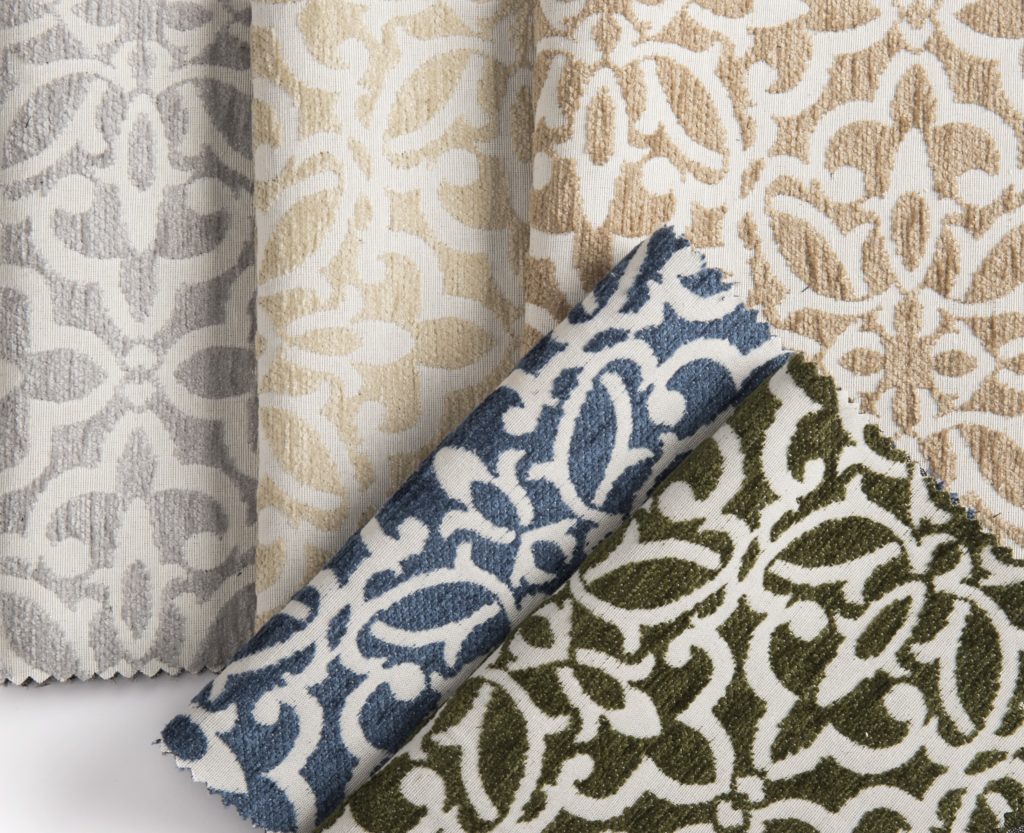
How to clean a fabric couch: find the W, S, WS or X cleaning code first, then match the method to the fabric.
How to clean a fabric couch comes down to one small tag: the cleaning code. Four letters (W, S, WS and X) tell you which cleaners are safe on the fabric: water, solvent, both or neither. That matters more than any cleaner you buy.
Kehls has supplied upholsterers, motor trimmers and the public since 1970, and the same questions reach our counters: a juice ring on cream chenille, dog hair in bouclé, velvet that has gone shiny. This guide covers the codes, a step-by-step home method, fabric-by-fabric care and pet hair.
Contents
- Upholstery cleaning codes: find yours first
- Routine care: vacuum, rotate and brush
- How to clean a couch at home step by step
- Cleaning by fabric type
- How to remove pet hair from a couch
- When to call a professional upholstery cleaner
- Choosing a fabric that is easy to clean
- Try before you buy
- Resources
- FAQ
Upholstery cleaning codes: find yours first
Before anything wet touches the fabric, find the code. Upholstery cleaning codes sit on the care label, often under a seat cushion, and rule out the wrong cleaner in seconds. If you are having a couch covered, ask your upholsterer for the fabric’s cleaning code before it goes on.
W: water-based cleaners
According to Kothea’s guide to textile care abbreviations, W means the fabric can be cleaned with water-based agents, such as an upholstery shampoo. Diluted white vinegar also counts as water-based. If your tap water is hard, mix with distilled water so minerals do not dry into a ring.
S: solvent-based cleaners only
S means solvent-based, water-free cleaners only. Kothea warns that water on an S fabric can cause shrinkage or water marks, so a solvent cleaner goes on sparingly, never poured.
WS or S/W: either
WS means a water-based or a solvent-based cleaner is safe, according to Kothea. Some labels print it as S/W, and By Design notes that this code is rare and the cleaning is often best left to a professional. However it is written, test a hidden spot first.
X: vacuum and brush only
X means no liquid of any kind: vacuum or brush lightly, nothing more. A real stain on an X fabric is a job for a professional.
Key takeaway: read the code before you buy the cleaner. An upholstery shampoo is no help on an S or X fabric.
Routine care: vacuum, rotate and brush
Most couches are not ruined by one spill; they wear out from grit. Sand and dust in the weave act like fine sandpaper every time someone sits down. A weekly pass with the upholstery attachment lifts them out.
Rotate and flip reversible cushions so one seat does not take all the wear, and brush pile fabrics lightly in one direction.
Then there is sun fading. Strong South African afternoon light through a west-facing window fades dyes, and a cushion that never moves soon shows a line. Rotate the cushions and draw the curtains in the hottest hours.
How to clean a couch at home step by step
Here is how to clean a couch at home on a W or WS fabric, with no steam cleaner needed. On an S fabric, use a solvent cleaner at step 5 instead. On an X fabric, stop at step 2.
- Vacuum: remove crumbs, grit and hair first, or you will rub them into the fibres.
- Brush: loosen the surface with a soft brush.
- Deodorise: sprinkle bicarbonate of soda, leave it for an hour, then vacuum it off.
- Test: dab your cleaner on a hidden area, let it dry and check the colour.
- Clean: work diluted upholstery shampoo or white vinegar into the mark with a white cloth, from the edge inwards. Futonland’s stain guide gives the rule: test first, then blot rather than rub, because rubbing grinds the stain deeper.
- Rinse: blot with a cloth dampened in distilled water.
- Dry: open the windows, run a fan and stay off the couch until it is fully dry.
Myth: more water means a deeper clean. Reality: over-wetting causes water marks, and foam that stays damp for days smells musty.
Scenario snapshot: juice lands on a cream chenille couch coded W. Blotted within minutes, it can dry without a tide line. Left overnight and scrubbed, it tends to spread and set.
Cleaning by fabric type
There is no single answer to how to clean a fabric couch: the code tells you what is safe, and the weave tells you how to handle it.
| Fabric | Main method | Main risk |
| Velvet | Soft brush head, blot spills, brush the pile one way once dry | Crushed or shiny pile from rubbing |
| Chenille and bouclé | Low suction, an almost-dry cloth, no stiff brushes | Snagged loops and trapped crumbs |
| Microfibre and suede-feel | Only the cleaner the code allows, applied sparingly, then brushed | Water marks |
| Cotton, linen and polycotton | Spot clean with a barely damp white cloth | Rings from over-wetting |
| Outdoor fabric | Brush off dirt, clean to the code, dry on edge in the shade | Mildew if stored damp |
How to clean a velvet couch
How to clean a velvet couch starts with the pile, the short upright fibres that give velvet its sheen. Vacuum with a soft brush head, blot spills at once and never rub a wet patch. Once it is dry, brush the pile in one direction. Our velvet fabric range includes Moulin Rouge, Deluxe and Hogan Suede Feel; ask your nearest Kehls branch about care for each one.
How to clean chenille and bouclé
Both have raised, looped surfaces that snag. Use low suction, skip stiff brushes and blot with an almost-dry cloth. Loops trap crumbs, so vacuum more often. Our guide to velvet, chenille and bouclé compared covers how each one wears, and you can see the ranges on our chenille fabric and bouclé fabric pages.
How to clean a microfibre couch
Microfibre is known for leaving water marks when it is cleaned with water, according to Homes and Gardens, so check for an S code before anything wet goes near it. On an S fabric, Hunker’s guide dabs a small amount of isopropyl (rubbing) alcohol onto the fabric with a cloth, lets it dry, then brushes the fabric to lift the texture. Test it on a hidden spot first. Our Suede Feel and Hogan Suede Feel ranges sit within our velvet range.
How to clean cotton, linen and polycotton
Flat weaves such as cotton, linen and polycotton (a cotton and polyester blend) have no pile to crush, so spot cleaning is simpler. Natural fibres can mark when over-wetted, so keep the cloth barely damp. On a white couch, use only white cloths so no dye transfers. Our guide to cotton, polycotton and synthetic upholstery fabric explains how each fibre behaves.
How to clean outdoor and patio fabrics
Stoep cushions face sun, dust and the odd shower. Brush off loose dirt first, clean according to the code, then stand the cushions on edge in airy shade to dry fully before they go back. Our outdoor fabric range includes Agora, a premium acrylic chosen for its resistance to fading, moisture and mildew.
How to remove pet hair from a couch
A vacuum alone often leaves hair behind in textured weaves. How to remove pet hair from a couch is mostly about rubber: a damp rubber glove or a rubber squeegee drags hair into clumps, and the vacuum finishes the job, as Coleman Furniture describes.
The fabric matters too. Tightly woven fabrics let go of hair more easily, while plush, textured fabrics such as velvet and chenille hold on to it, according to Dreame. If you are re-covering, our guide to pet-friendly upholstery fabric compares the options. For a couch that smells of dog, start with bicarbonate of soda (step 3 above).
When to call a professional upholstery cleaner
Some jobs need a professional: a real stain on an X-coded fabric, old marks, mould, anything that has soaked into the foam, and valuable pieces. A professional upholstery cleaner brings extraction equipment that cleans deep without leaving the cushion wet. Give them the cleaning code before they arrive.
If the foam underneath is past saving, Kehls offers foam cut to size at our Cape Town, George and Pinetown branches.
Choosing a fabric that is easy to clean
The easiest couch to clean is one chosen with cleaning in mind. Before you buy upholstery fabric, check four things:
- Cleaning code: W or WS gives you the most options at home.
- Weave: tight, flat weaves shrug off hair, while loops and deep pile need more care.
- Martindale rub count: this measures abrasion resistance, as Kothea’s Martindale guide explains, so a busy family couch needs a higher count than an occasional chair. Our guide to understanding Martindale rub count sets out the numbers.
- Colour: mid-tones and patterns hide marks better than cream.
For fabric, our upholstery polishers and protectors range includes Spot Away Foam Spotter and Spot Away Fabric Shampoo for lifting marks. Check your cleaning code before using any shampoo, and test a hidden spot first.
Try before you buy
The best time to think about how to clean a fabric couch is before it gets dirty. Request free fabric samples, browse our décor fabric ranges and see how each one handles your light and your pets. Our fabric is sold by the metre, with free delivery in and around Cape Town, Monday to Friday.
Pop in-store at your nearest Kehls branch in Maitland, Pinetown or George, or WhatsApp the branch with a photo of your couch, and we will help you match the right fabric to the job.
Resources
- Kothea, Fabric care symbols and textile abbreviations: https://www.kothea.com/2013/12/29/fabric-care-symbols-textile-abbreviations/
- By Design, Upholstery cleaning codes: https://www.bydesignthestore.com/upholstery-cleaning-codes/
- Futonland, How to remove stains from upholstery: https://futonland.com/blog/how-to-remove-stains-from-upholstery/
- Homes and Gardens, How to clean a microfiber couch: https://www.homesandgardens.com/life-design/how-to-clean-a-microfiber-couch
- Hunker, How to clean a microfiber couch with rubbing alcohol or other solutions: https://www.hunker.com/13420572/how-to-clean-a-microfiber-couch-with-rubbing-alcohol-or-other-solutions
- Coleman Furniture, How to remove pet hair from a couch: https://colemanfurniture.com/resources/how-to/how-to-remove-pet-hair-from-couch
- Dreame, How to get pet hair off a couch: https://www.dreametech.com/blogs/blog/how-to-get-pet-hair-off-couch
- Kothea, Martindale rub test guide: https://kothea.com/2026/04/05/martindale-rub-test-guide/
Frequently asked questions by customers
Does vinegar clean a couch?
Diluted white vinegar can lift some marks and odours from water-safe fabrics coded W or WS, but test it on a hidden area first because it can affect some dyes and finishes. Do not use it on fabrics coded S or X, and never soak the fabric. Blot rather than rub, then let the area dry fully.
Are microfibre couches washable?
Most microfibre couches cannot be washed whole, though some have removable covers that the care label allows to be washed. Check the cleaning code first: an S code means solvent-based cleaners only, and microfibre is known for water marks when cleaned with water. Following the code avoids rings and stiff patches.
How do you spot clean microfibre without water marks?
Water marks on microfibre usually come from using water on an S-coded fabric or from over-wetting. Use only the cleaner the code allows, apply it sparingly with a white cloth, blot instead of rubbing, then brush the pile with a soft brush once it is dry to restore the texture.
What is the best tool to remove pet hair from a sofa?
A rubber glove, a rubber pet-hair brush or a slightly damp rubber squeegee works well because the rubber gathers hair into clumps. Follow with the upholstery attachment of a vacuum. Tightly woven fabrics release hair more easily than looped or heavily textured weaves.
What is the safest way to clean a fabric couch?
Start with the cleaning code on the care label, then vacuum, test your cleaner on a hidden area and blot the mark from the edge inwards. Use water-based cleaners only on W or WS fabrics and solvent cleaners on S fabrics; on X fabrics, vacuum and brush only. That is how to clean a fabric couch without leaving rings or water marks.